Science
The Intent, Implementation and Impact of our Curriculum – Science
Laceby Stanford Primary Academy understands the need for all pupils to develop their Scientific ability as an essential component of all subjects and as a subject in its own right. A good understanding of scientific knowledge and conceptual understanding helps to support pupils work across the curriculum.
Intent
At Laceby Stanford Primary Academy we believe that a high quality science education provides the foundations for understanding the world through the specific disciplines of biology, chemistry and physics. Science has changed our lives and is vital to the world’s future prosperity, and all pupils should be taught essential aspects of the knowledge, methods, processes and uses of science. Through building up a body of key foundational knowledge and concepts, pupils should be encouraged to recognise the power of rational explanation and develop a sense of excitement and curiosity about natural phenomena. They should be encouraged to understand how science can be used to explain what is occurring, predict how things will behave, and analyse causes.
Science in our school is about developing children’s ideas and ways of working that enable them to make sense of the world in which they live through investigation, as well as using and applying process skills. The staffs at Laceby Stanford Primary Academy insure that all children are exposed to high quality teaching and learning experiences, which allow children to explore their outdoor environment and locality, thus developing their scientific enquiry and investigative skills. They are immersed in scientific vocabulary, which aids children’s knowledge and understanding not only of the topic they are studying, but of the world around them. We intend to provide all children regardless of ethnic origin, gender, class, aptitude or disability, with a broad and balanced science curriculum.
Implementation
In ensuring high standards of teaching and learning in science, we implement a curriculum that is progressive throughout the whole school.
Planning for science is a process in which all teachers are involved to ensure that the school gives full coverage of, ‘The National Curriculum programmes of study for Science 2014’ and, ‘Understanding of the World’ in the Early Years Foundation Stage. Science teaching at Laceby Stanford Primary Academy involves adapting and extending the curriculum to match all pupils’ needs. Where possible, Science is linked to class themes. Science is taught as discrete units to ensure coverage. Due to one form year groups in our school, Science units are taught on a year rolling programme. This ensures progression between year groups and guarantees topics are covered. Teachers plan to suit their children’s interests, current events, their own teaching style, the use of any support staff and the resources available.
As part of the planning process teachers need to plan the following:
- A knowledge organiser which outlines knowledge (including vocabulary) all children must master.
- A cycle of lessons for each subject which carefully plans for progression and depth.
- Encourage open-mindedness, self-assessment, perseverance, and developing skills of investigation-including: observing, measuring, predicting, hypothesising, experimenting, communicating, interpreting, explaining and evaluating.
- A diagnostic assessment at the beginning of each new unit and at the end to support learners’ ability to block learning.
- Develop the use of scientific language and recording.
- Making links between science and other subjects.
- Trips and visits from experts who will enhance the learning experience.
Science is taught consistently, once a week for up to two hours, but is discretely taught in many different contexts throughout all areas of the curriculum.
At Laceby Stanford Primary Academy we aspire to promote children’s independence and for all children to take responsibility in their own learning, therefore we have implemented self/teacher assessment sheets, which the children use as a working document to track their achievements and progress throughout a topic.
Impact
The impact and measure of this is to ensure children not only acquire the appropriate age related knowledge linked to the science curriculum, but also skills which equip them to progress from their starting points, and within their everyday lives.
All children will have:
A wider variety of skills linked to scientific knowledge and understanding, and scientific enquiry/investigative skills.
A richer vocabulary which will enable to articulate their understanding of taught concepts.
High aspirations, which will see them through to further study, work and a successful adult life
A parents guide to the new National Curriculum (not Foundation/Seedlngs class). More information can be found on the Rising Stars website
An Egg-cellent Science Investigation
Science Investigation in Marigold Class
Y4 - What is pitch and how can we alter it?
Year 4 have had a wonderful day at the beach
Year 2 Scientists Explore at Far Ings
We Care for Animals: The Blue Cross Charity
The Great Toast Tumble: British Science Week in Year 2
A Cracking Science Investigation
Primary Science Quality Mark (PSQM)
Reading for Information: Animal Facts
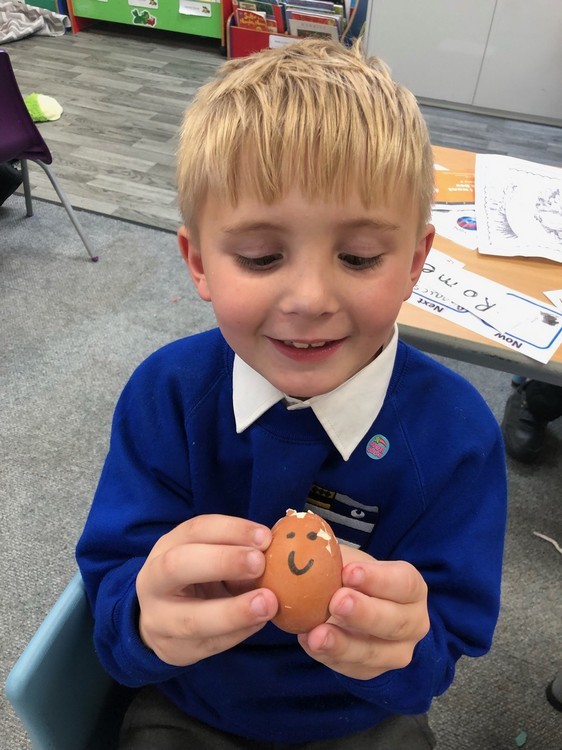
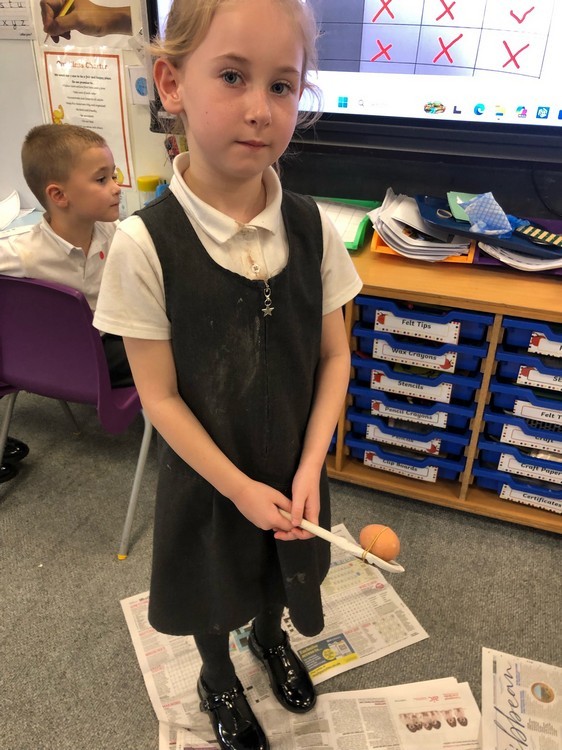
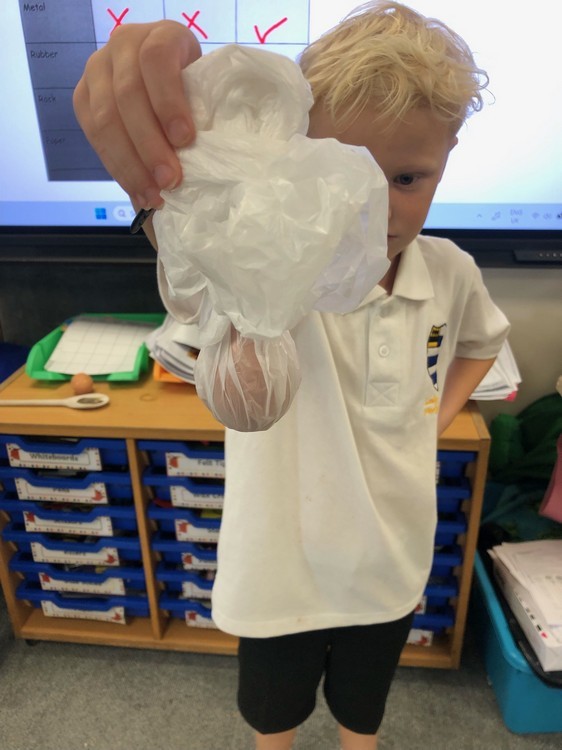
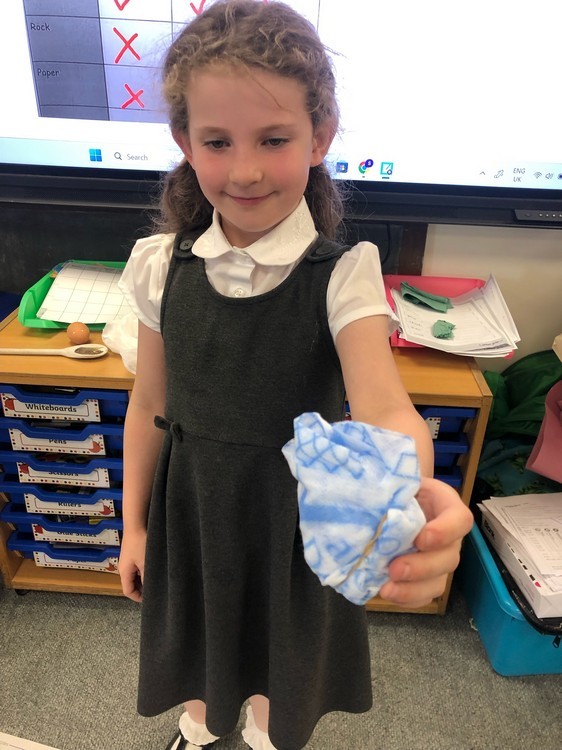
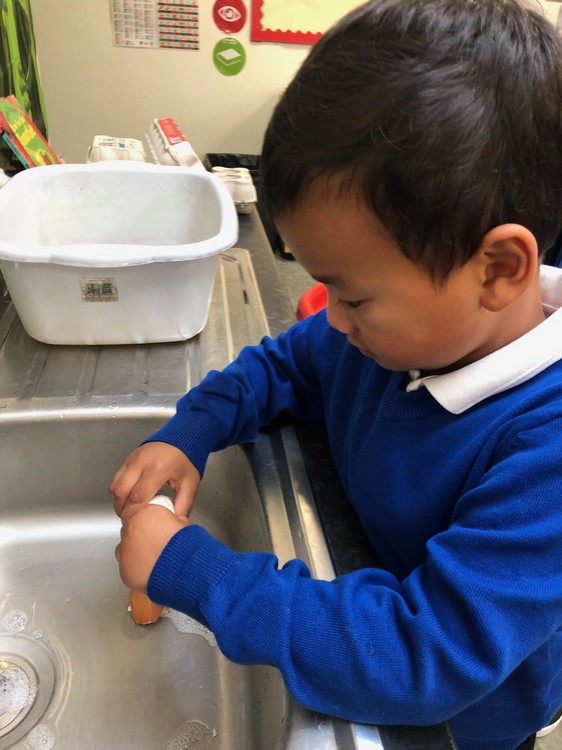
🥚An Egg-cellent Science Investigation!
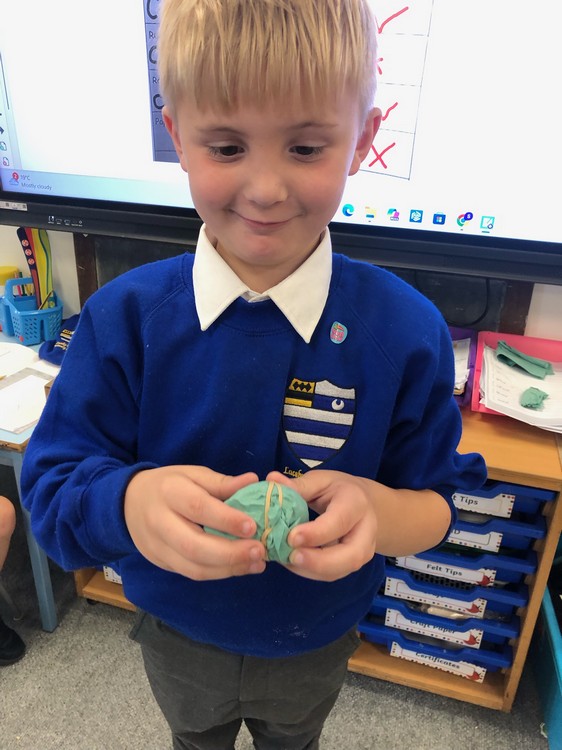
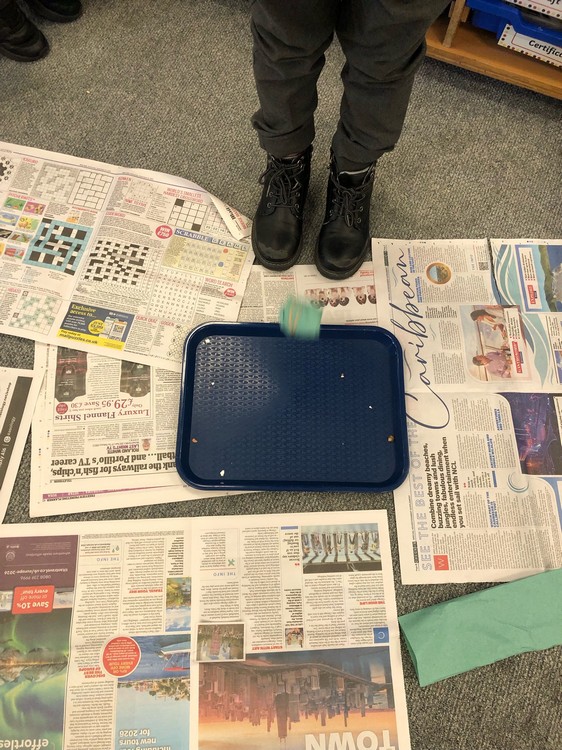
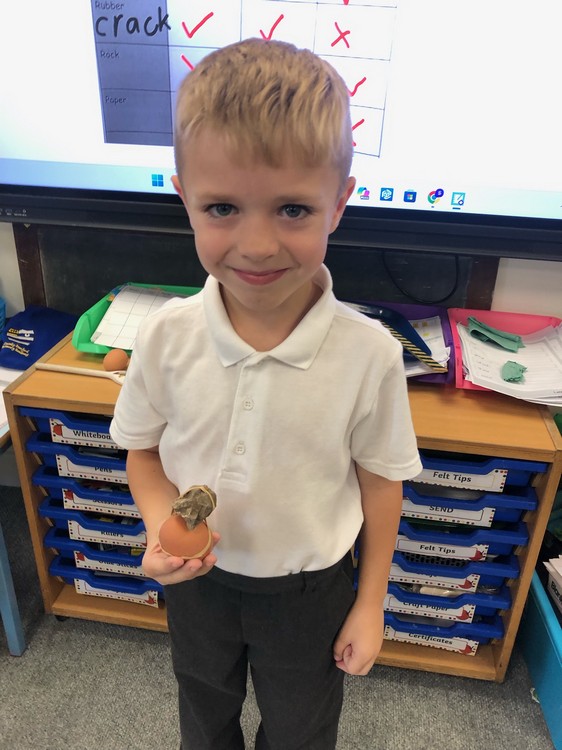
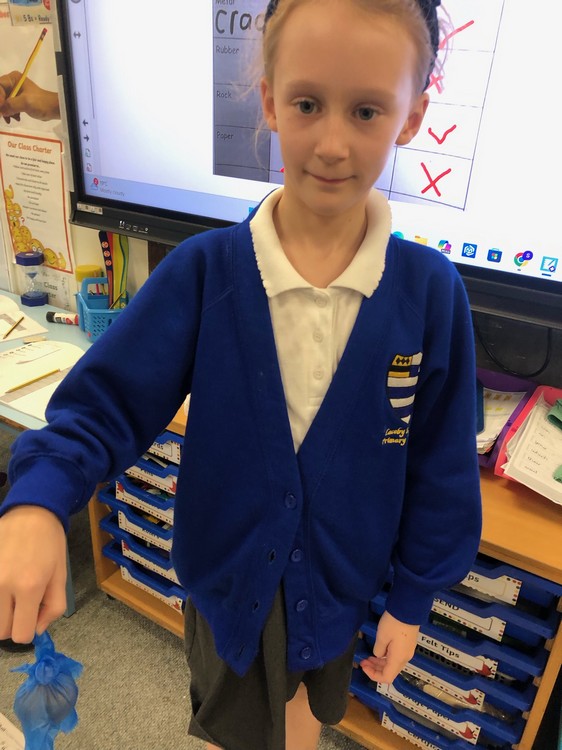
Pumpkin Class took on the challenge of helping Humpty Dumpty keep his shell safe! As part of their science investigation, the children wrapped real eggs in different materials to see which would offer the best protection.
It was an 'eggcellent' and hands-on way to learn!
The children said:
“I thought rubber would work best because if he falls he would bounce.”
“It was so exciting dropping the eggs to see if they would crack.”
“We tried lots of different materials, but nearly every time Humpty cracked his head.”
“We found out that soft fabric was best for protecting Humpty’s fragile shell.”
“Fabric gave Humpty’s head padding.”
Investigating Materials
In Year 5 we have been looking at how we can identify and classify the properties of different materials by seeing if they were transparent, magnetic, waterproof, conductors or hard.
The children were surprised by some of the things they discovered - that all materials are not magnetic and rocks are not always hard.


🔬 Science Investigation in Marigold Class! 🚗
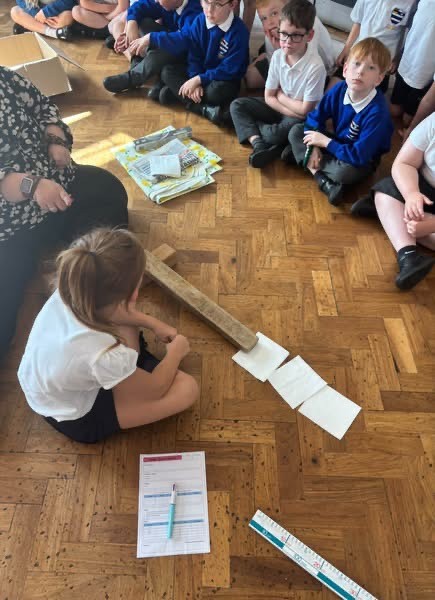
Marigold Class have been busy investigating different surfaces during our science lessons! We began by making predictions about what we thought would happen when a car travelled down a ramp onto different surfaces.
We then carried out our investigation, testing the car on a range of surfaces and carefully observing what happened.
We used scientific language to describe and explain our findings, thinking about how the different surfaces affected the movement of the car. We were fantastic scientists, making predictions, carrying out a fair test and recording our observations!
Women in Industry
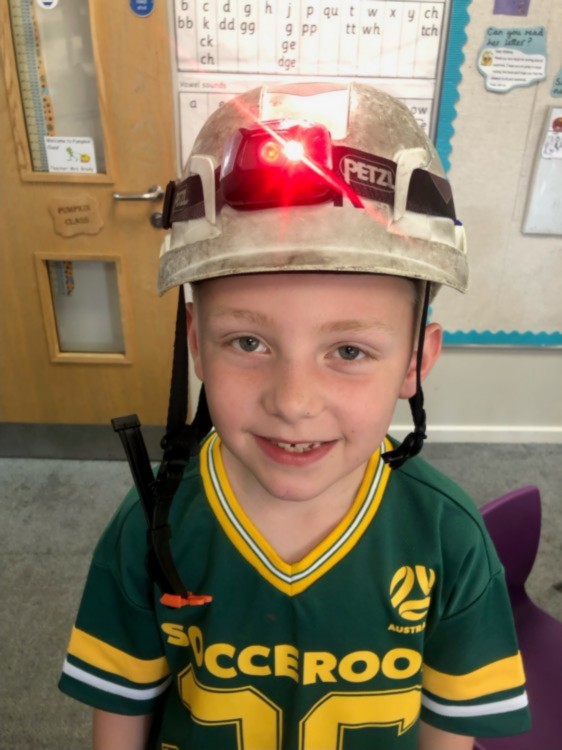
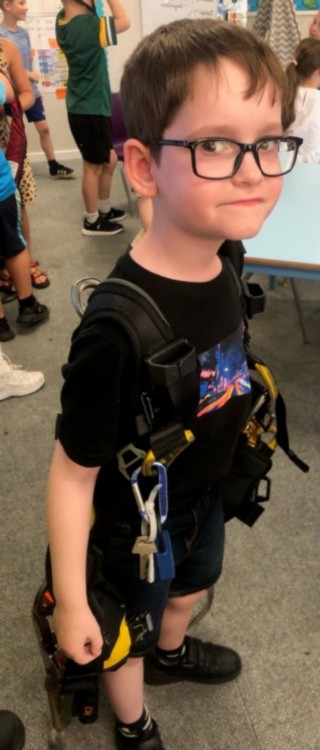
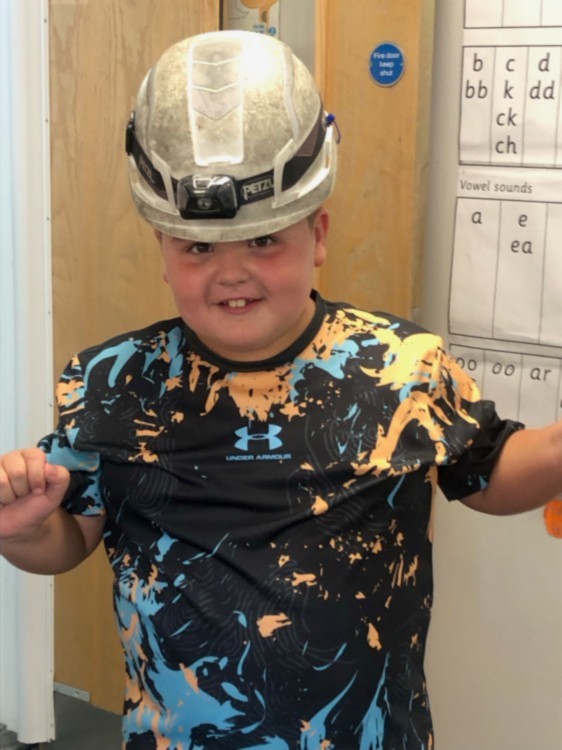
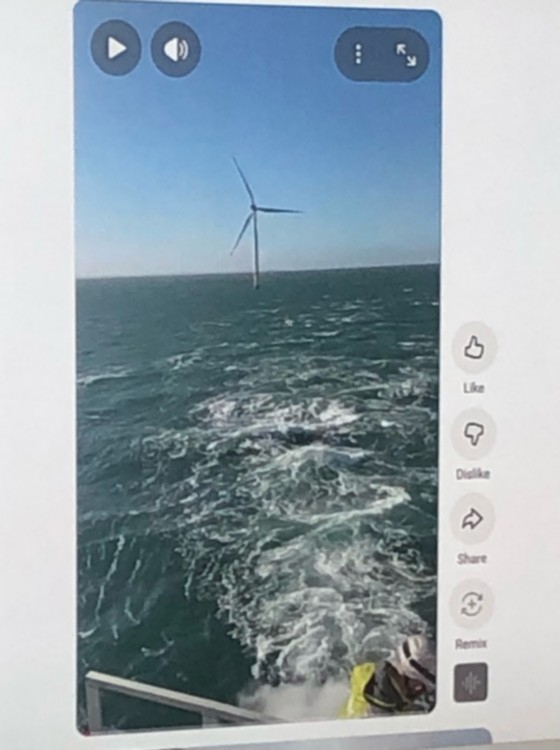
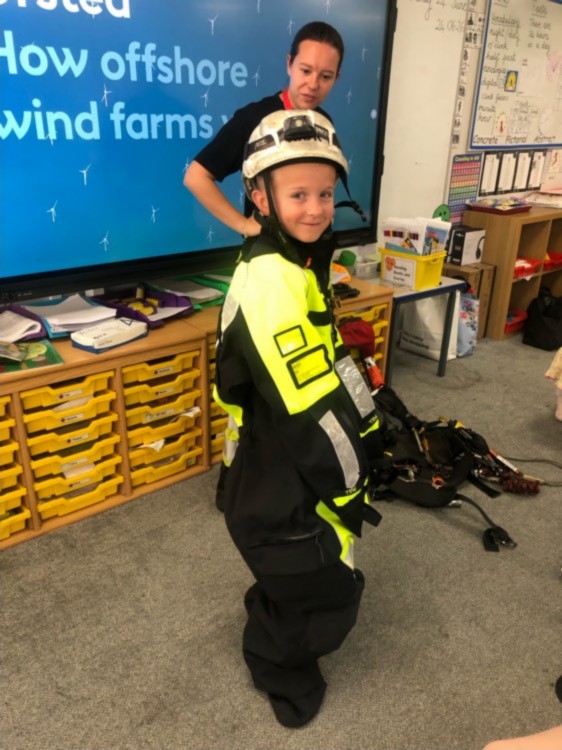
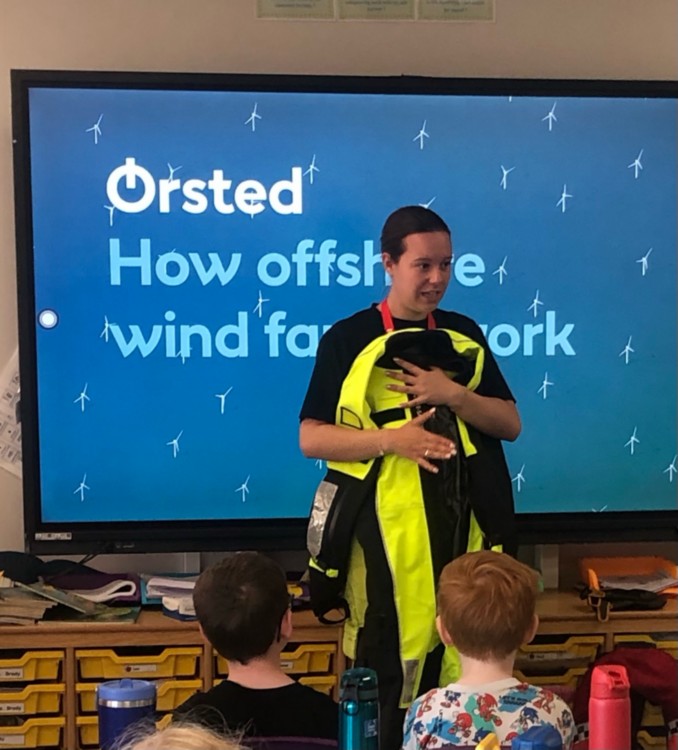
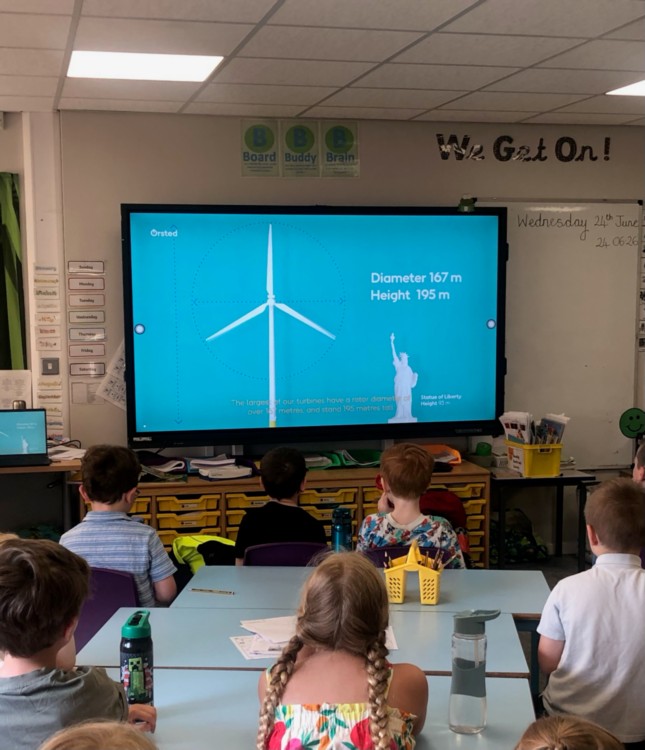
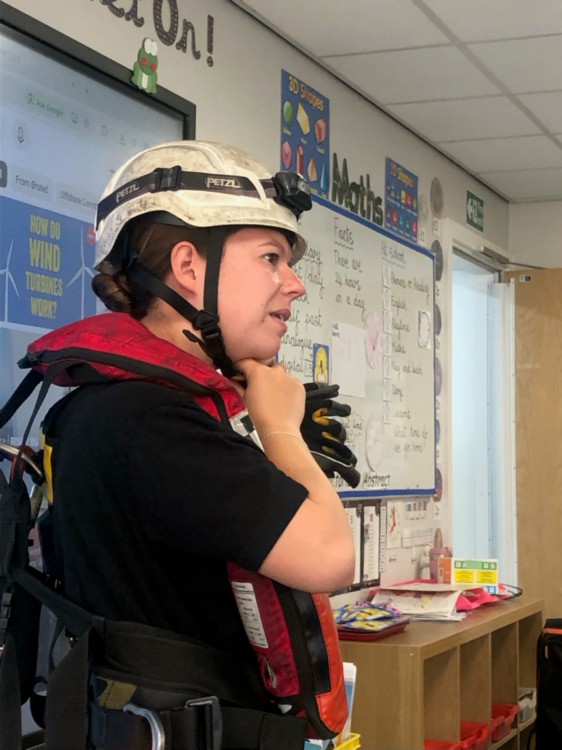
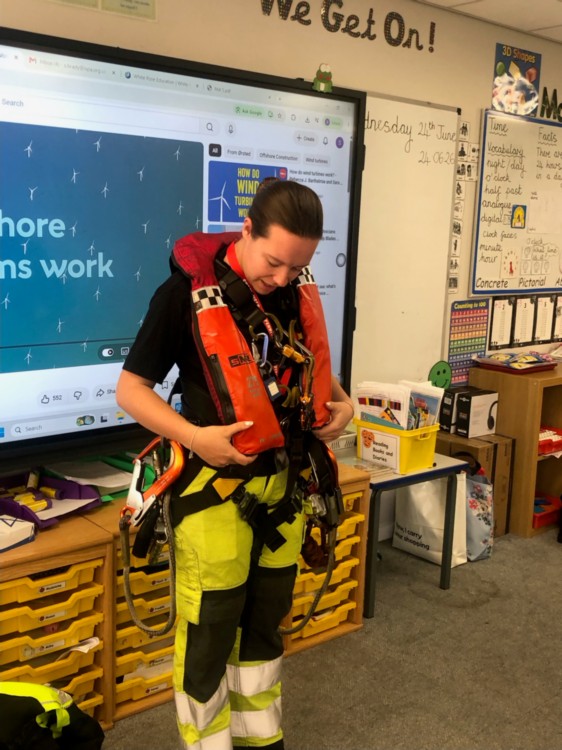
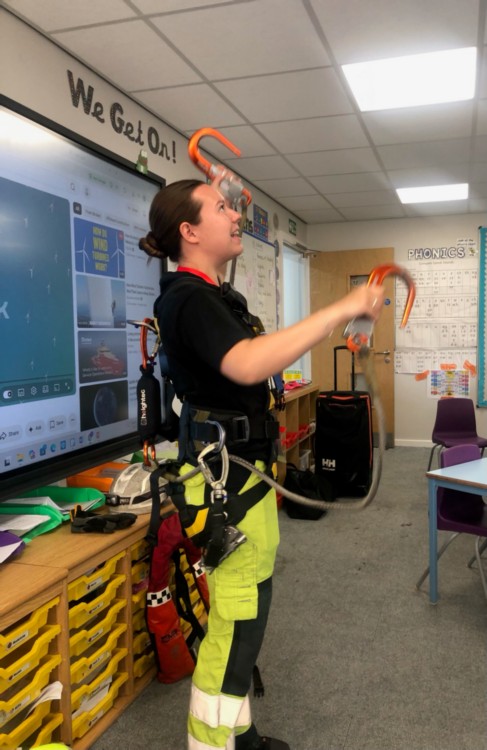
Maddie from Ørsted visited Pumpkin Class to share her exciting job working on wind turbines. She told us how she travels by boat to reach the turbines, then climbs right to the top wearing special safety clothes, a hard hat and a heavy harness. Her job is to fix the turbines when they break and make sure they keep working properly to make clean energy. Maddie said she’s the only girl on her team, but that hasn’t stopped her! We loved trying on her safety gear — the harness was really heavy!
Volcanoes
Messy Science club have had yet another extremely messy session! We have been working on our volcanoes for a couple of weeks and this week, it was finally time to see them erupt!
The children were very excited to see the eruption, and squealed with delight when Mrs Wardle accidentally got covered in vinegar.
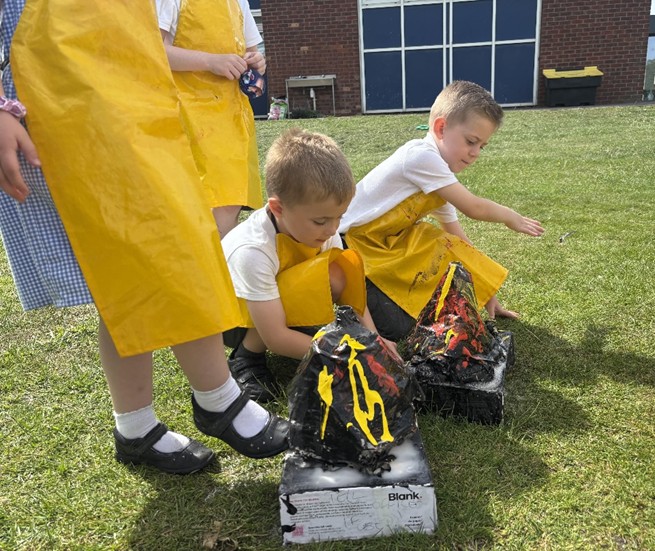
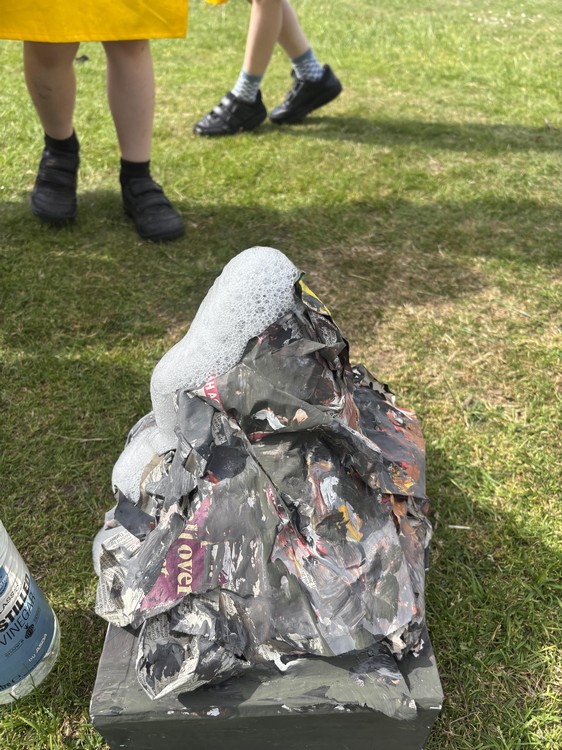
After that, they helped by repotting the year 1 beanstalks, to help them grow.
Y4 - What is pitch and how can we alter it?
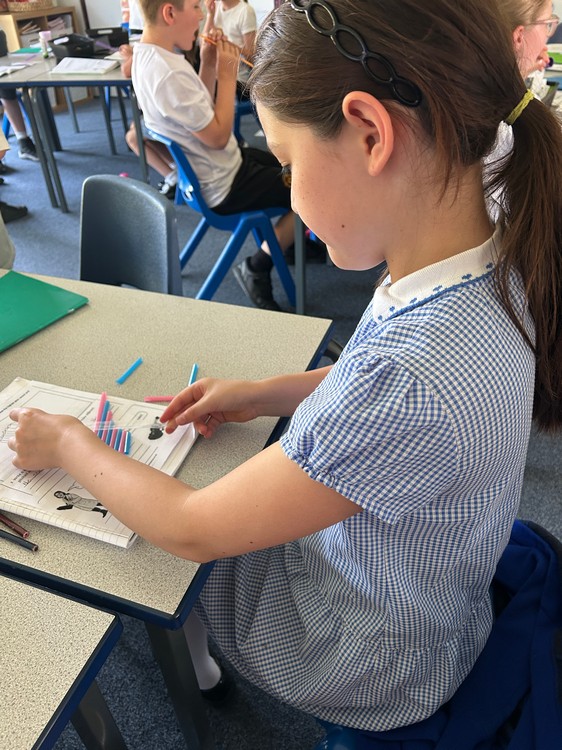
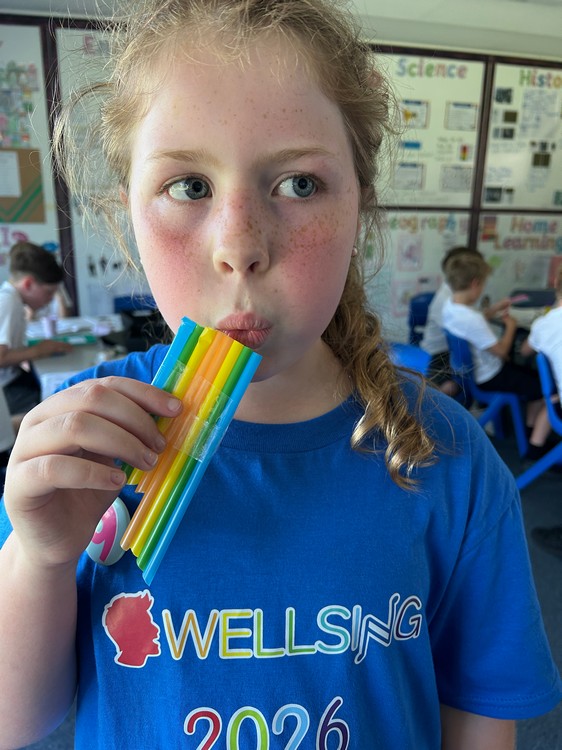
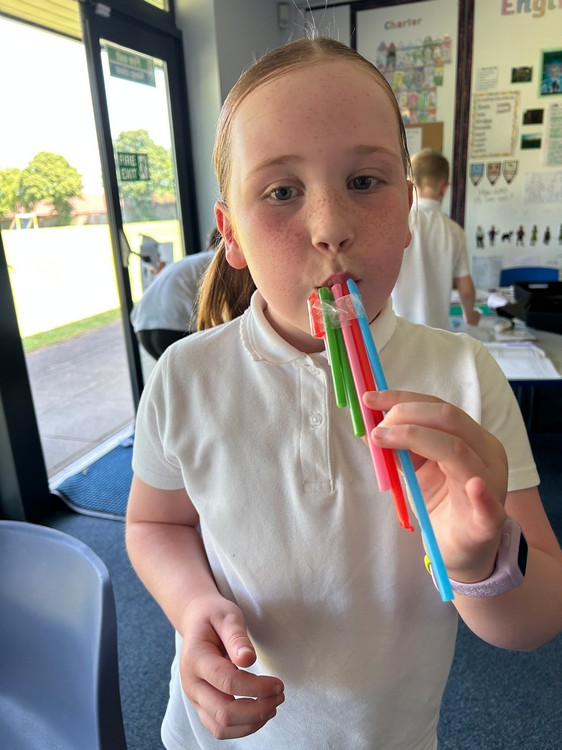
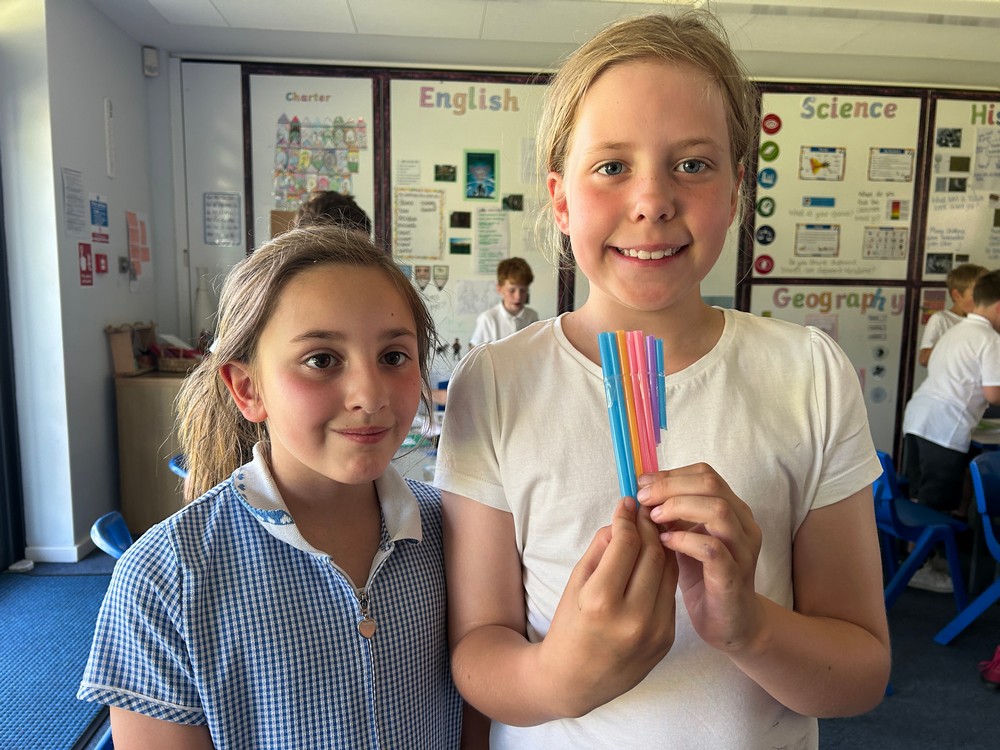
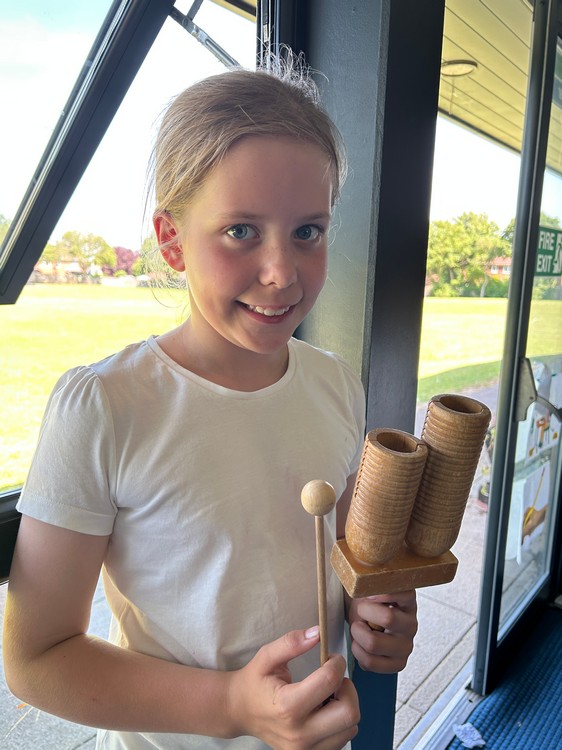
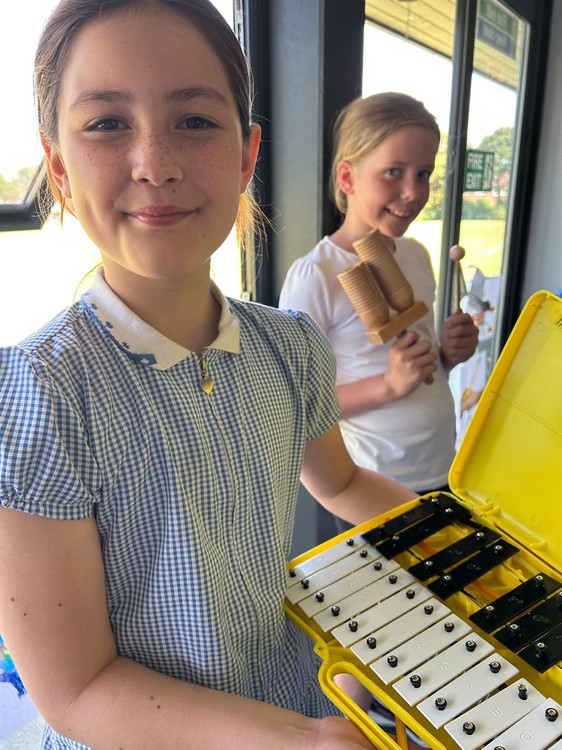
In our learning about sound we have been investigating pitch… whether the sound is high or low. We discovered that the more an object vibrates the higher the pitch. Pitch can be altered by the size or tightness of the object. The children used straws to make a musical instrument which they really enjoyed.
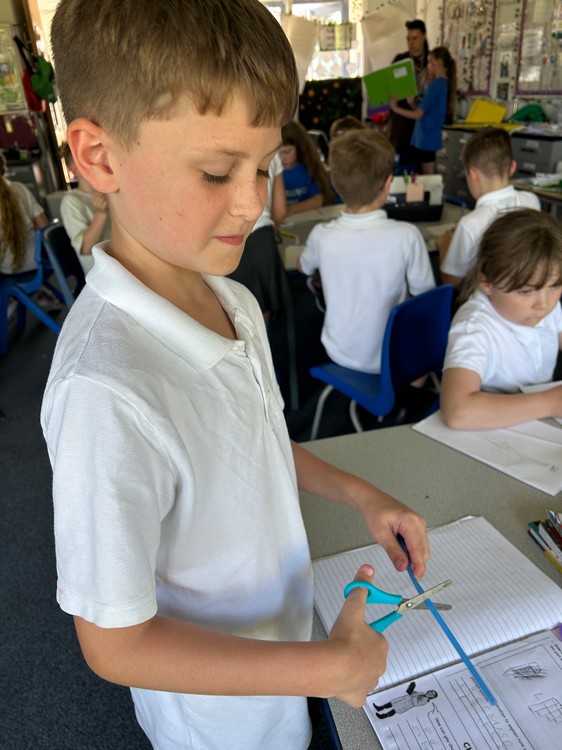
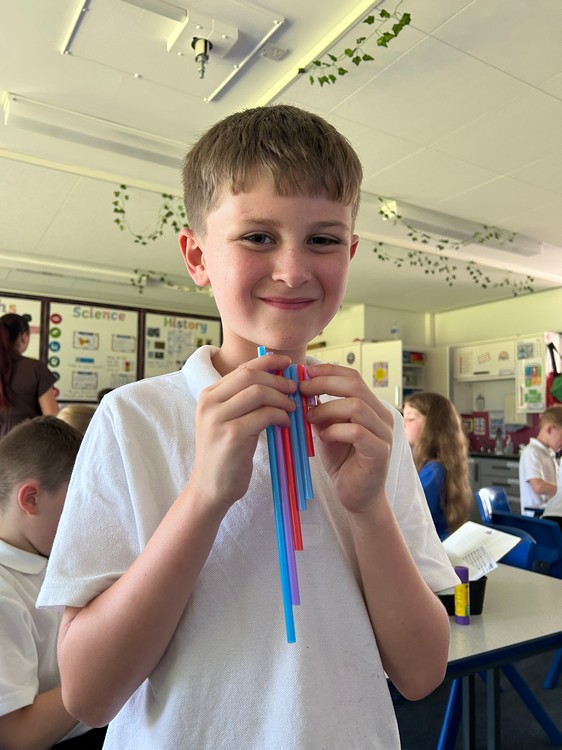
Year 4 Investigating Sound
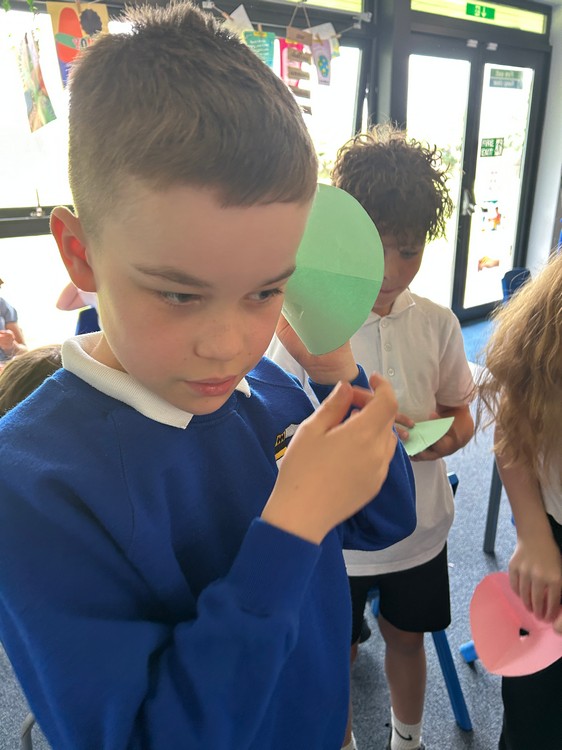
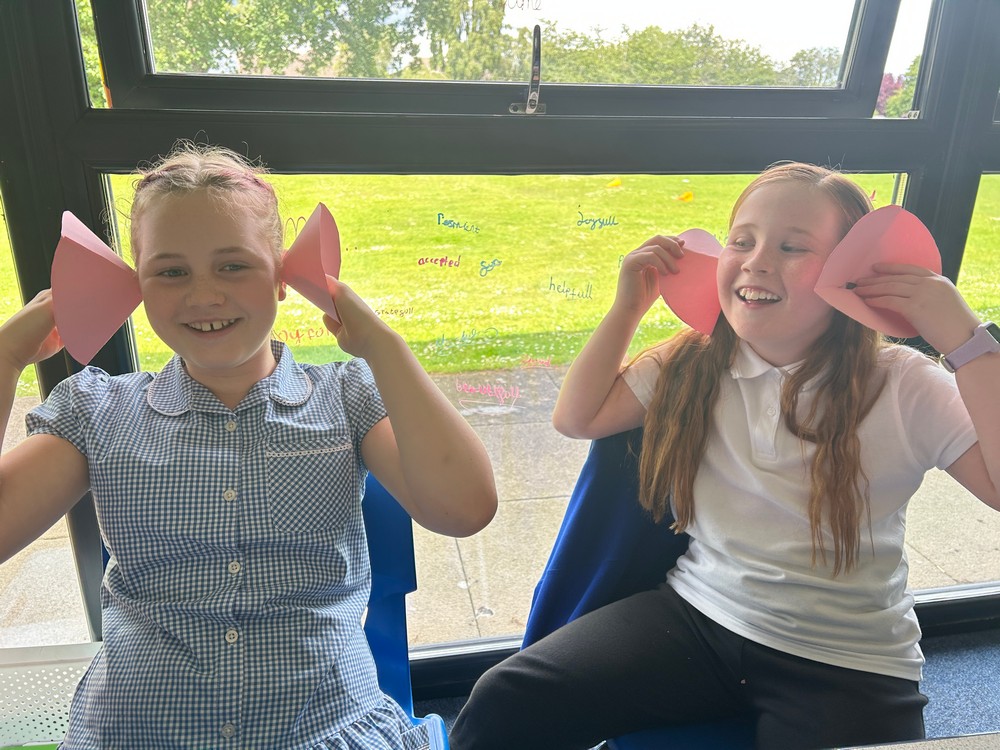
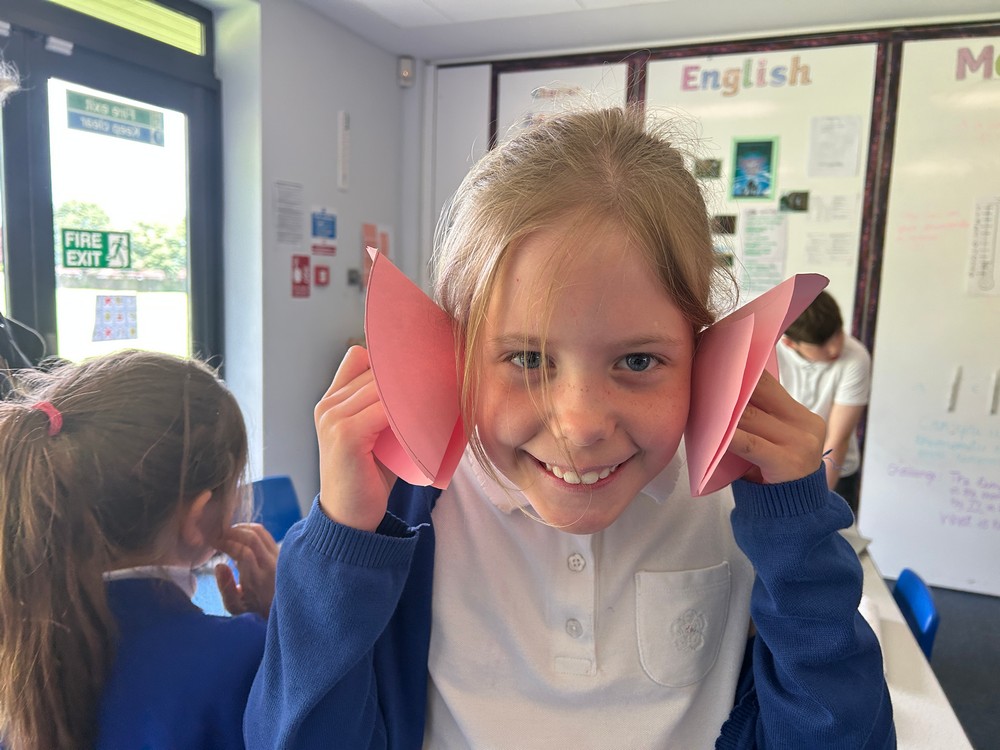
We have been learning about the different parts of the ear and how we hear sound. The children were asked to investigate if the size of our pinna (outer ear) affects how well we can catch sound waves. The children made cones of different sizes to see if they made any difference and they discovered the bigger the pinna, the more you can hear!
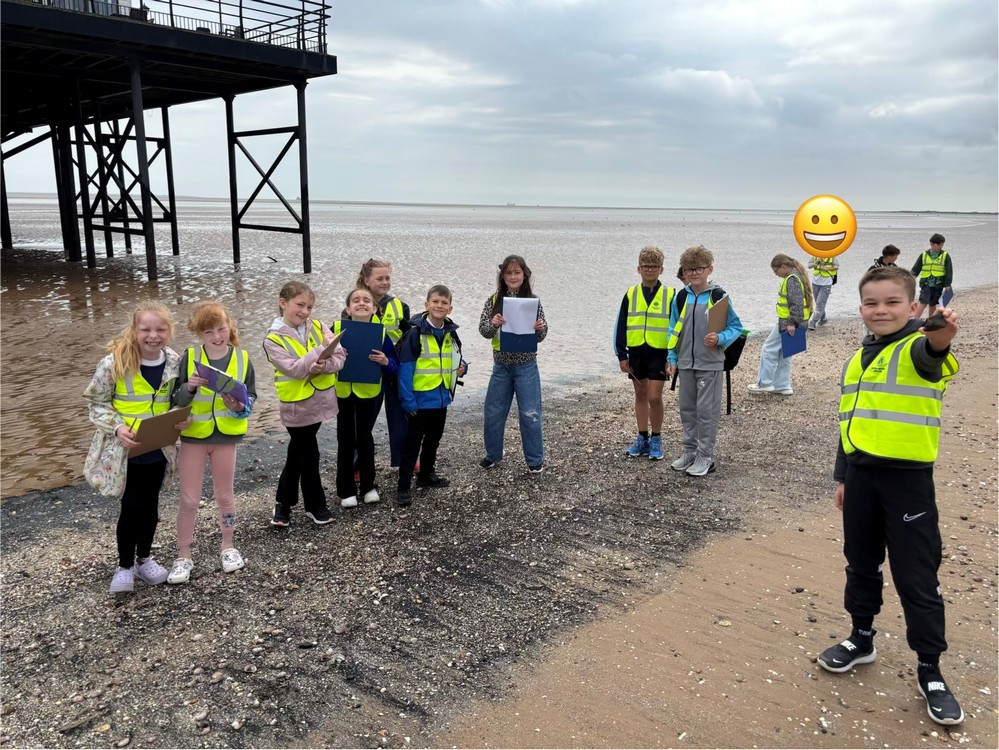
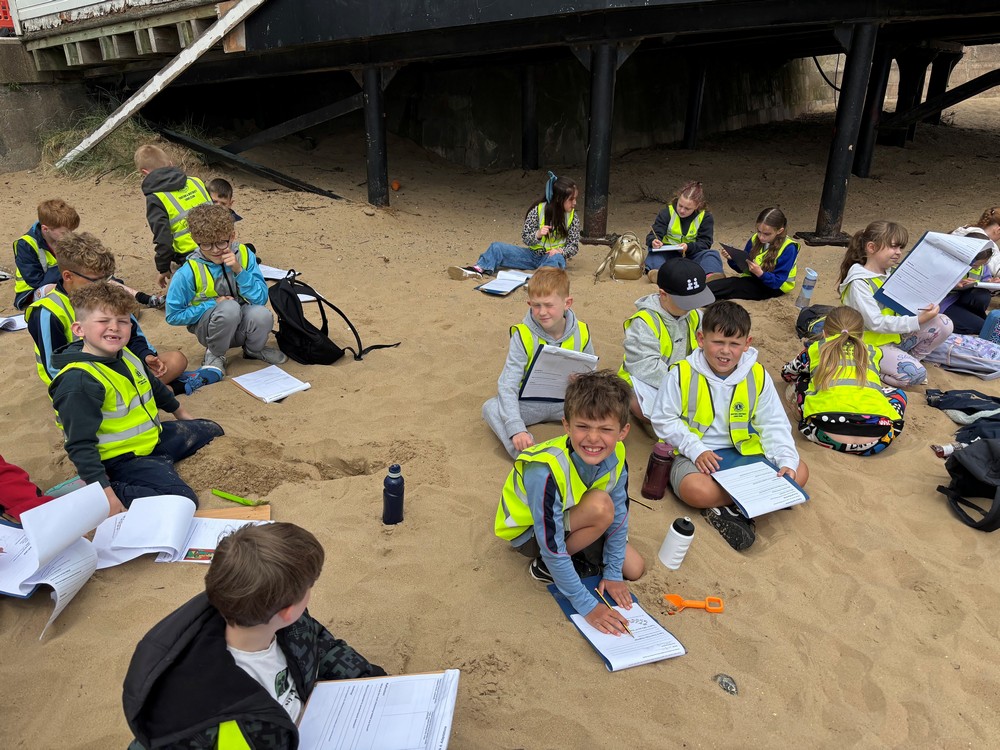
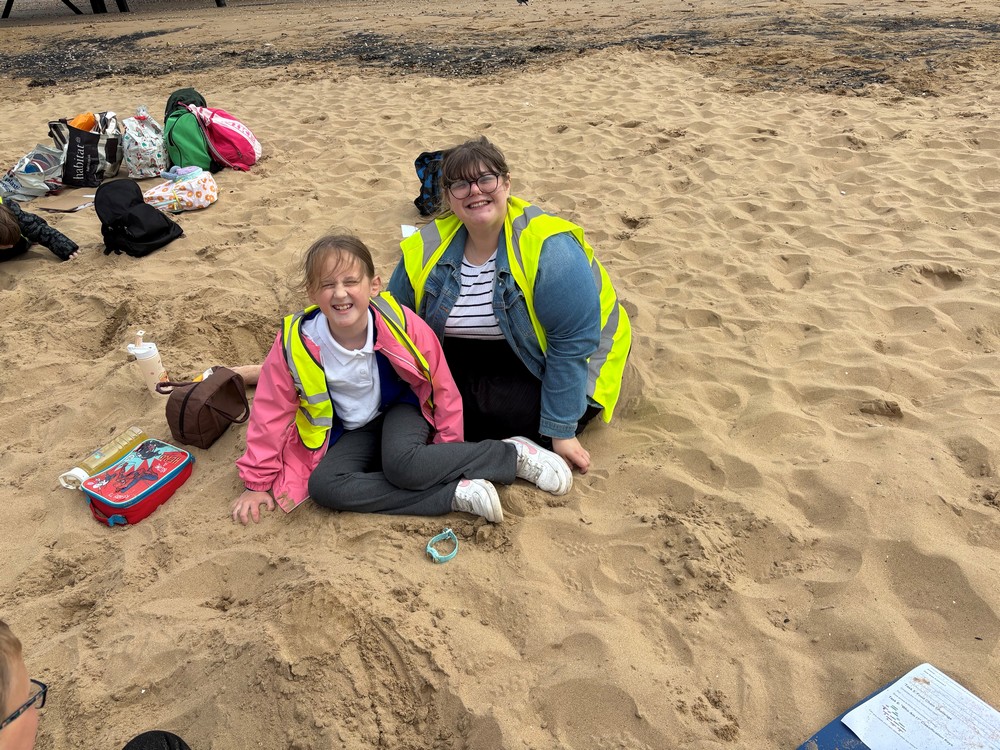
Year 4 have had a wonderful day at the beach!
We started our morning by exploring the beach, looking for different habitats and signs of animals that live along the coastline. The children enjoyed spotting evidence of wildlife and learning about the creatures that call the beach their home.
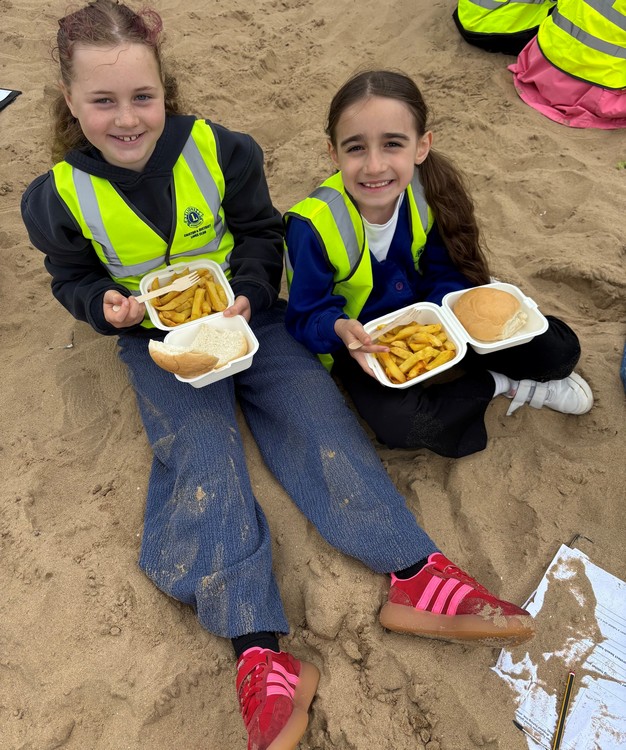
After a busy morning, we fuelled up with chip buns for lunch (with ketchup being entirely optional!) before spending the afternoon sketching our beach views. As part of our art work, we focused on expressing movement and emotion through our drawings, carefully observing the landscape around us and thinking about how to capture its atmosphere.
Before heading back to school, the children enjoyed some well-earned free time on the beach, building in the sand and making the most of the beautiful surroundings. It was a fantastic day full of learning, creativity and fun!
Year 2 Scientists Explore at Far Ings!
Pumpkin Class had a fantastic day at Far Ings Nature Reserve with Emma from the Wildlife Trust. Outdoors all day, they learned how wetlands, woodlands and ponds create habitats for wildlife. The highlights included bird watching with binoculars from the lake hide, pond dipping for fish and pond creatures, woodland games to identify trees and plants and using magnifying glasses to find mini-beasts. They also made clay faces with leaves and twigs and listening to relaxing forest sounds. The children only went inside the Education Centre for their packed lunches and came back outside buzzing with science learning and big smiles.


Tropical World
We have really enjoyed our time at Tropical World today! The children have had a fantastic day exploring all of the different habitats and learning about a wide variety of animals from around the world. We walked through the rainforest and spotted monkeys, meerkats, butterflies and colourful birds, before visiting the aquarium and discovering different species of fish and reptiles. The children loved observing the animals closely and asking lots of thoughtful questions about their habitats, diets and how they survive in the wild. One child even discovered their own insect during the visit and independently researched what animal they had found, showing fantastic curiosity and enthusiasm for learning. We also spent time exploring the plant life and learning about tropical climates and ecosystems.


Learning about plants
As part of our plant topic in Science, Year 1 are going to be putting their scientific enquiry skills to good use, by observing plants over time.
They have learnt what plants need to grow and stay healthy and have planted their very own beans, complete with a giant's castle.
Over the next few weeks, they will observe their plants and discuss at length, using lots of scientific vocabulary, what has changed and why, and will draw and label diagrams.


Messy Science
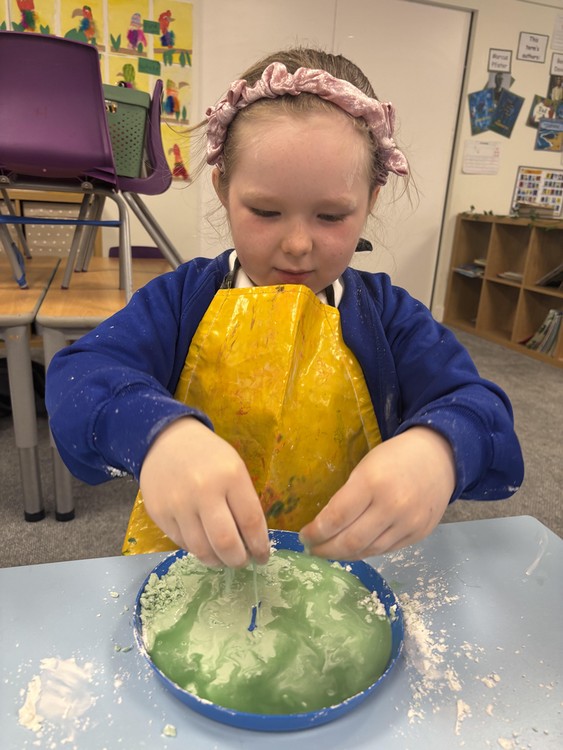
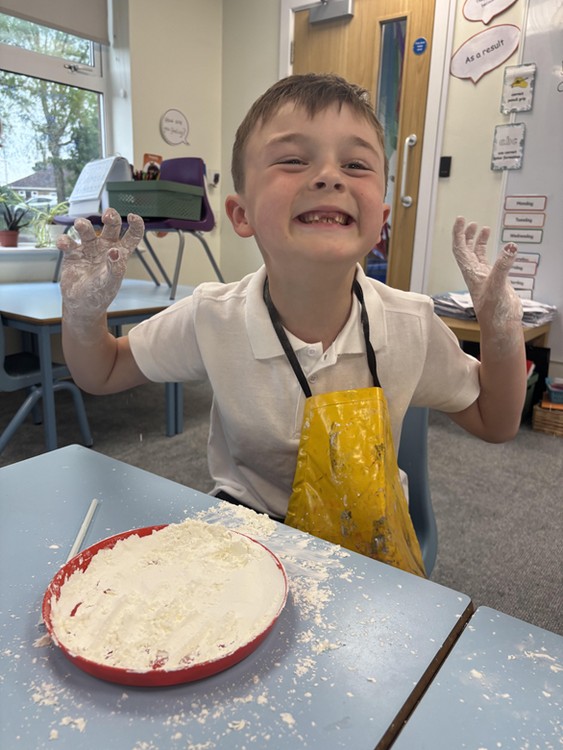
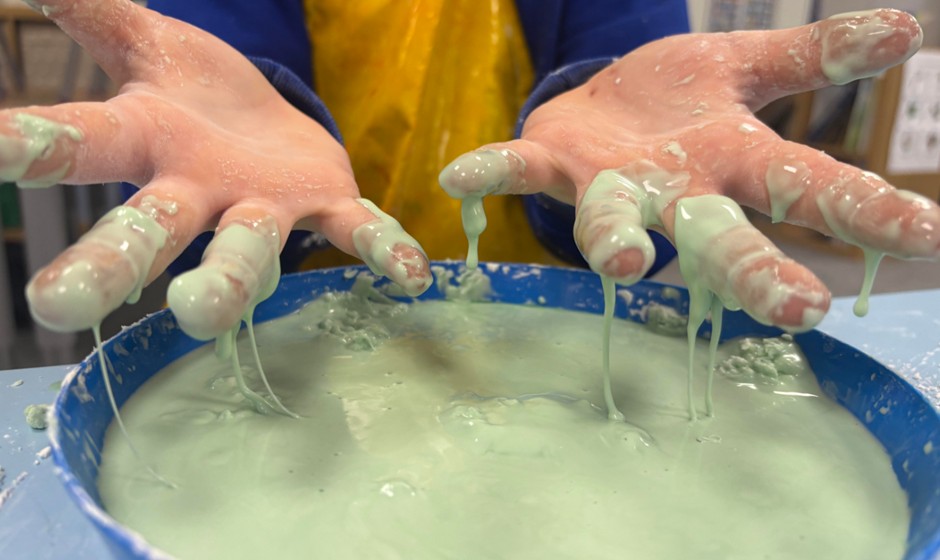
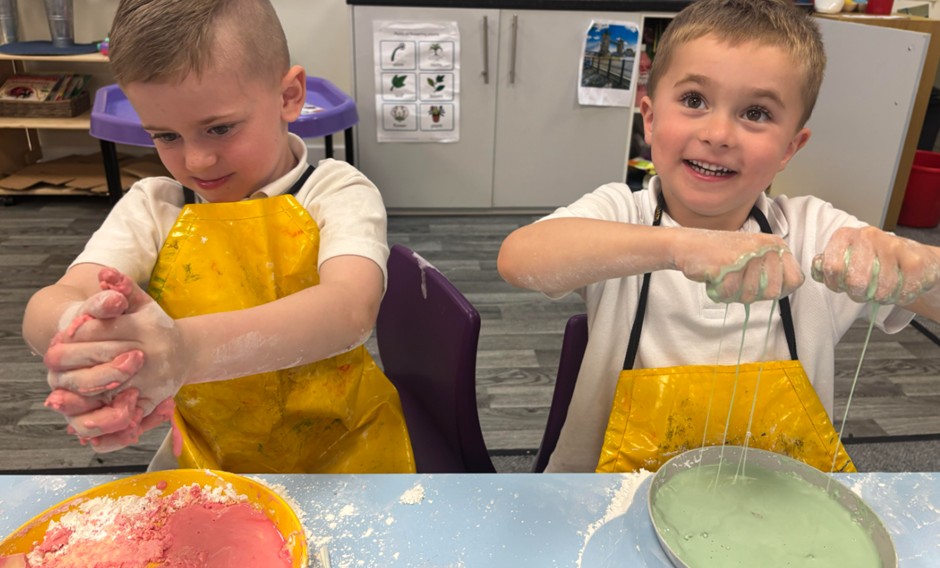
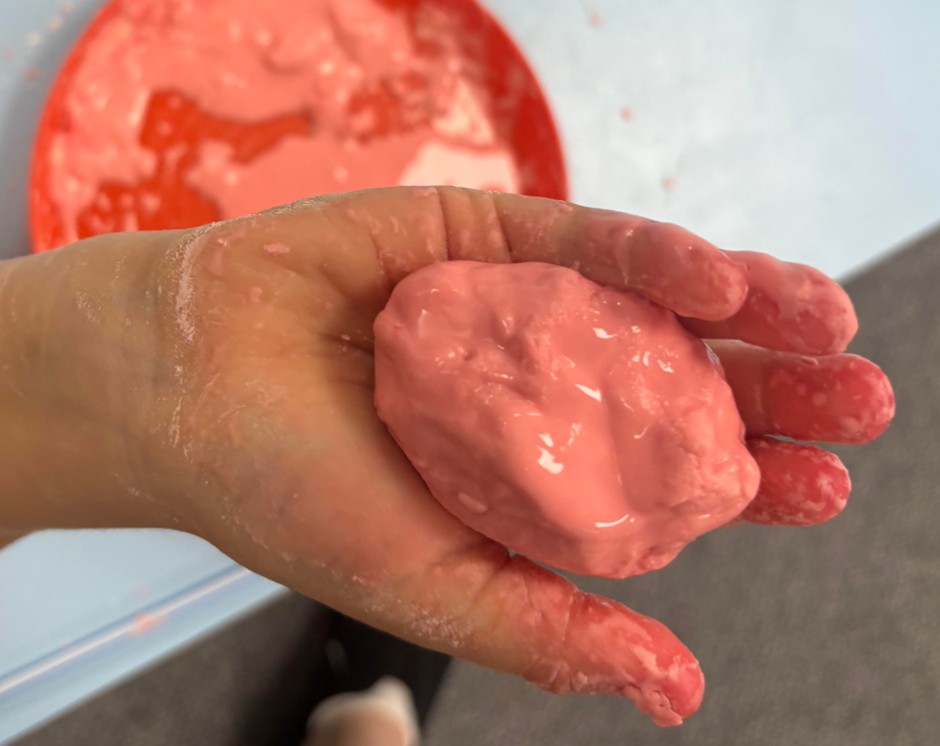
Our first ever Messy Science session was on Monday. Our scientists became "atom experts" by learning all about how atoms behave in solids and liquids. They discovered that atoms in a solid stand still and hug tight, while atoms in a liquid love to slip and slide past each other. To see this in action, the children mixed up a magical non-Newtonian fluid that acts like a shapeshifter; when they poked it hard and fast, it turned into a tough solid, but when they let it rest in their hands, it melted away like gooey slime! It was a brilliantly messy way to kick start our new messy science club!
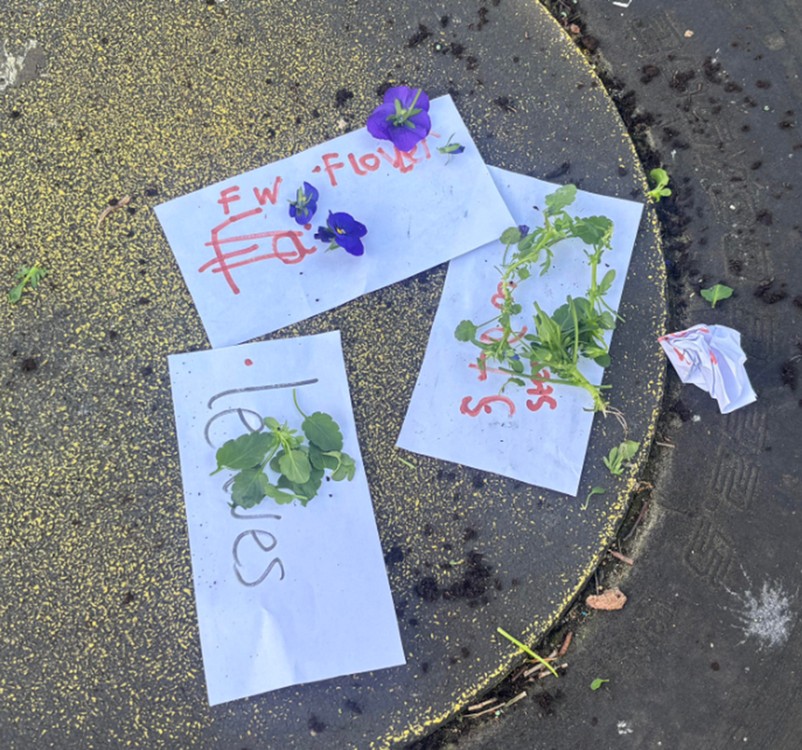
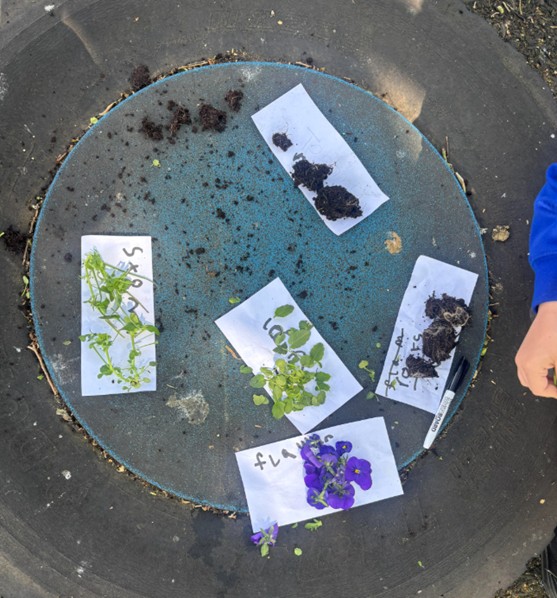
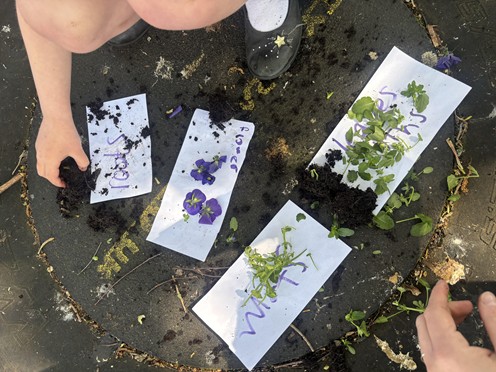
Parts of a Flowering Plant
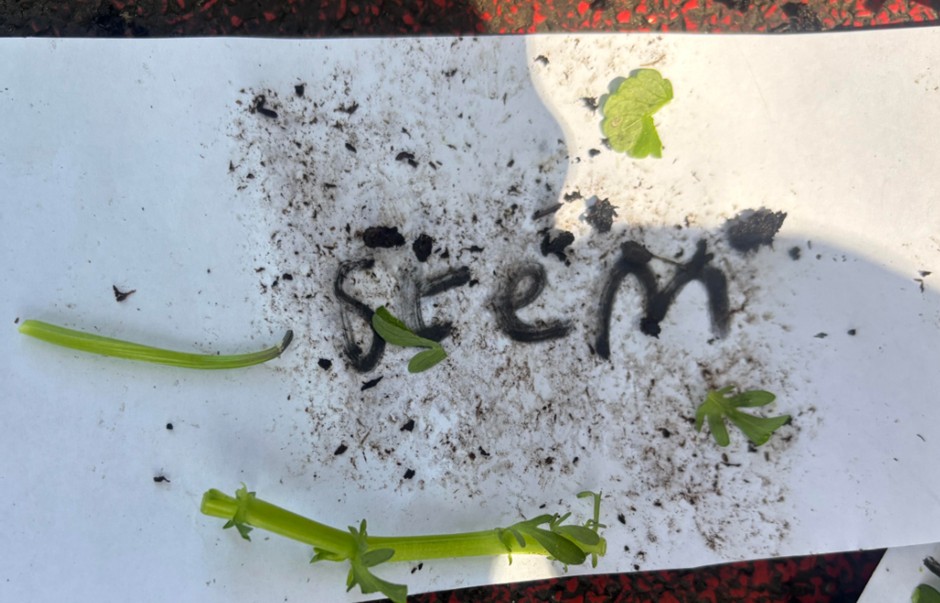
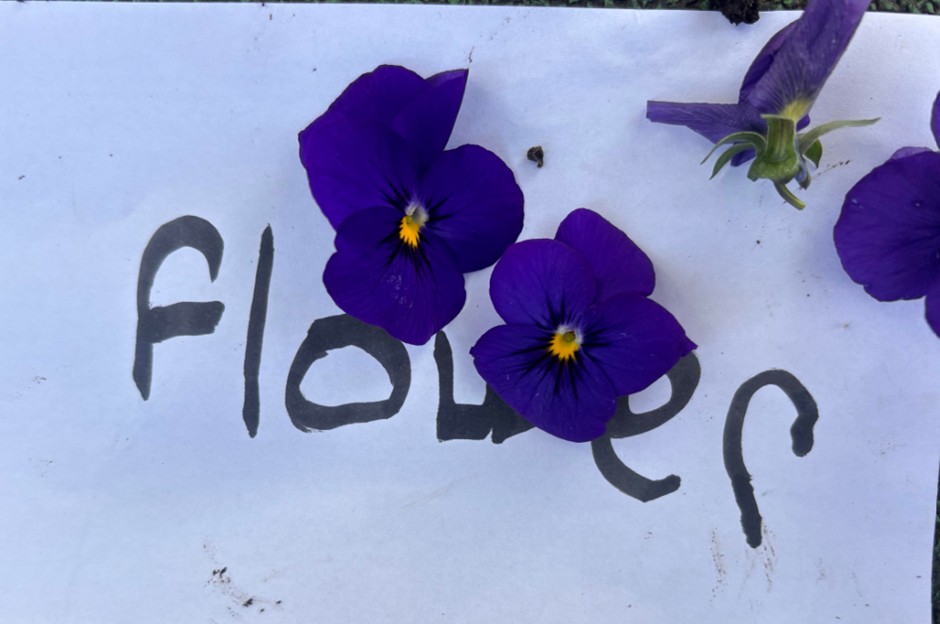
Year 1 have enjoyed taking advantage of the good weather and have brought their learning outside. We have learnt the names of the structural parts of a flowering plant and have used real plants to look closely at them.
We Care for Animals: The Blue Cross Charity
Year 2 welcomed Mr Ives from Grimsby‘s Blue Cross Animal Hospital into their classroom for a fascinating talk about animals and pets.
‘We found out the Blue Cross began in 1897 and they helped injured horses in WWI.’
‘Mr Ives told us how the Blue Cross helps sick pets and some animals need operations.’
‘We saw X-rays of animals that had eaten things that made them ill, like an old sock.’
‘Mr Ives told us about different kinds of food and things that can be poisonous to our pets, like chocolate and antifreeze.’
‘We talked about dangerous animals that might bite us and how we should stay away from aggressive animals.’
‘He brought a toy dog called Cocoa and taught us how to give a dog CPR if it wasn’t breathing.’


Science Week: Bird Nests
Barley Class have had a fantastic Science Week learning about how birds build their nests. Our experiment consisted of molding a nest out of clay, using materials from outside to show how we could protect eggs. We sketched our designs in our books and made predictions as to whether our nests would survive strong wind and rain.
We collected our materials from outside, choosing what we thought would help make our rests more durable, insulated and sturdy. We then used clay to mold the base for our nests before filling it with our materials. We used twigs, leaves, pipe cleaners, wool, grass, feathers and flowers inside our nests.
We then used a fan and tested each different setting to see how well our nests would hold their ‘eggs’ before watering the nests to see how they fared in the rain.
All 10 nests passed the test and proved their durability and the children had a fantastic time both making and testing their creations!


The Great Toast Tumble: British Science Week in Year 2
In celebration of British Science Week, our Year 2 scientists turned the classroom into a laboratory to investigate a classic mystery: Does toast always land butter-side down? The children had a fantastic time conducting hands-on experiments, carefully dropping slices of toast and recording their results to see if the "butter-side-down" theory held up. This exciting investigation sparked plenty of curiosity, leading the children to wonder if variables like the size and shape of the bread, or even removing the crusts, might change how it lands. It was a brilliant way to explore the scientific method while having plenty of messy fun!
"I think the butter side was a bit heavier and that was why it kept landing butter side down."
"It was interesting to try it without butter and just draw an X on one side of the toast. We got a mixture of results"
"I wondered if how you drop the toast might change what happens? I tried dropping toast from above my head outside."


Speaking to Scientists
For British Science Week, we had the opportunity to speak with real-life scientists and ask them questions about their jobs and experiences. This gave us a fascinating insight into what working in science is really like.
Afterwards, we took part in an investigation focused on developing our teamwork skills. In small groups, we worked together in complete silence to stencil the outline of an animal. The results were very amusing, but the activity challenged us to communicate in different ways, trust one another, and collaborate effectively — just like scientists do every day.


Electrical Circuits
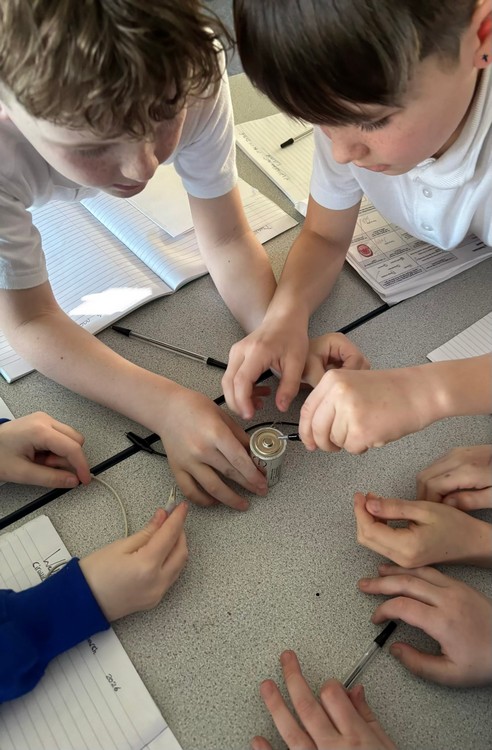
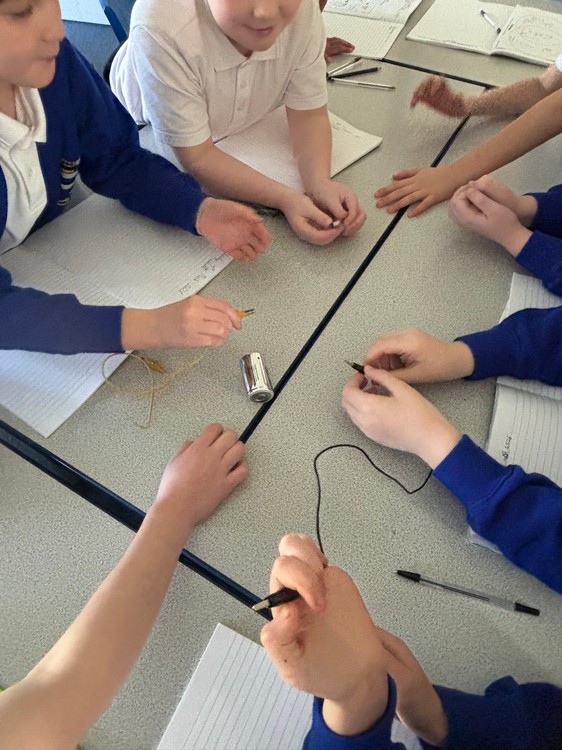
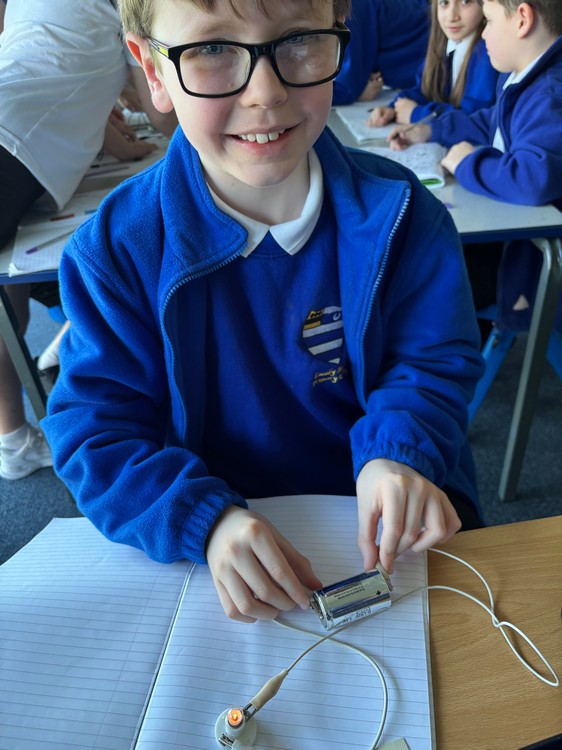
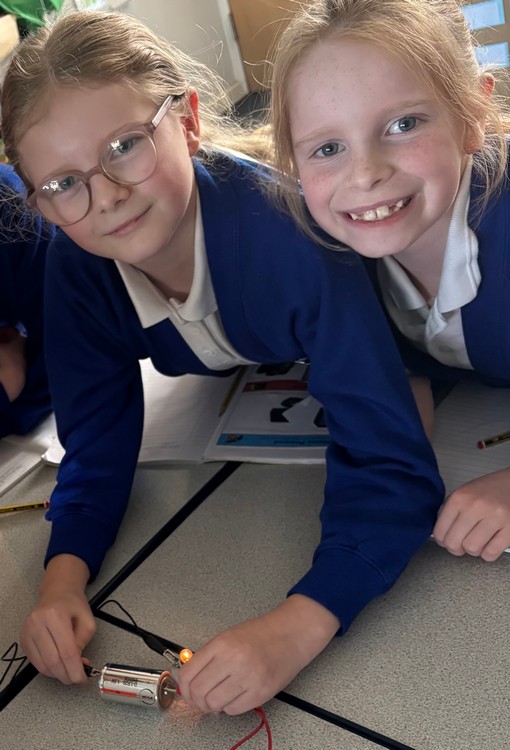
Today in Science, Year 4 have been learning about electrical circuits. Miss Purshouse provided us with the components and we investigated how to make a bulb light up by creating a complete circuit.
Once we had successfully lit the bulb, we challenged ourselves further by trying to make both a bulb and a buzzer work in the same circuit. We had to think carefully and avoid the misconception of creating two separate circuits. Instead, we ensured that both the bulb and the buzzer were connected within one complete circuit so that they worked together.
After successfully building our circuits, we drew and labelled scientific diagrams to show how our circuit was set up.
We demonstrated great teamwork, problem-solving and scientific thinking throughout the lesson!
Year 5 - Forces
We have been learning about the different forces which act on objects and this session we were focusing on air resistance. The children were set a challenge to make parachutes of different sizes to see which one landed last. We discovered that the parachute with the biggest surface area stayed in the air for longer as it ‘caught’ the most air. We then tried investigating whether the same thing happened with larger wings on paper planes. Isn’t science fun?


Investigating Tooth Decay

We have been investigating which drink causes the most tooth decay. To do this, we used hard-boiled eggs to represent teeth and placed them in different drinks: Coke, orange juice, water and milk.
Before starting the experiment, we made predictions. Many of us predicted that Coke would cause the most damage because it is fizzy and contains a lot of sugar. However, we were shocked by the results. Orange juice caused the most damage to the egg, showing clear changes to the shell. This surprised us because orange juice is often thought of as a healthy drink.
Water and milk caused very little or no damage, showing that they are better choices for keeping teeth healthy.
In our next science lesson, we will write up our findings and conclude our experiment. We will explain what we observed, compare the results to our predictions and discuss what we have learned about how different drinks can affect our teeth.
Heart Rates
In Science, Year 6 planned and conducted an investigation to find out how exercise affected their heart rates💪🏼
They measured their resting heart rate, and then measured it again after taking part in some moderate and vigorous intensity exercise to see what different it had made to the heart rate.
They also worked out their recovery rates! What a fun and interactive science lesson!


Defining Gravity
In year 5 we are learning about the different forces which act on objects. Today we looked at gravity and how it pulls all objects towards the centre of the planet. The children were set a challenge to investigate if this force acted equally on all objects. They were given a selection of objects and they had to predict which would fall the quickest. They were very surprised to discover that all objects landed at the same time.


A Cracking Science Investigation! 🥚
The Year 2 children wanted to help Humpty Dumpty protect his shell from cracking. They tested different materials wrapped around real eggs. It was ‘eggcellent’ fun!
‘I predicted rubber would be good for him because if he falls then he will bounce like a ball.’
‘It was egg-citing to drop the eggs and see if they cracked.’
‘We tested hard, soft, rough, smooth, thin and thick materials.’
‘We found out that a thick and soft fabric would protect Humpty’s fragile shell.’


Year 5 - Being Scientists
In Science we have been investigating materials and how we can mix and separate different materials through sieving, filtering, evaporation and using magnets. The children were asked to decide which method of separation would be the best for varying combinations of liquids and solids. They had lots of fun trying the different methods.


Primary Science Quality Mark (PSQM)

Laceby Stanford Primary Academy is proud to announce that it is one of 310 schools that has been awarded the Primary Science Quality Mark (PSQM) this month, a nationally recognised accreditation that celebrates a commitment to developing excellence in science leadership, curriculum design, teaching and learning.
Led by the University of Hertfordshire, for over a decade the Primary Science QualityMark (PSQM) has been setting children on a path to a life filled with excitingpossibilities and opportunities, by giving them access to a strong foundation in qualityprimary science education. Over 5,800 Quality Marks have now been awarded,impacting on the learning of over 1,000,000 children.
PSQM is a comprehensive, year-long professional development programme thatequips primary science subject leaders with the knowledge, capability and support needed to raise the quality and profile of science across the whole school. At the heart of the programme is a structured development cycle that embeds critical reflection and promotes a culture of continuous improvement.
Helen Sizer, PSQM Director said: ‘By achieving The Primary Science Quality Mark, a school has shown commitment to raising the profile and quality of science education through the development of effective science leadership, visionary curriculum design
and excellent teaching practice which is positively impacting on children’s learning
across the school. Such success is only possible through the collective effort of the
whole school community, and all those involved should be incredibly proud of this
achievement and the positive difference this is making to children’s learning and
understanding of the world around them.’
We are Science investigators 💡
As part of our Electricity unit, Year 6 pupils have been investigating if different components affect the brightness of a bulb. Pupils planned their investigation, looking carefully at the variables and how to ensure to make it a fair test. Pupils then used different components to test the brightness of a bulb… great work Barley class!


Y4-Investigating Sound
We have been investigating pitch and volume. First Miss Perrin played a high pitch sound and the children moved until they stopped hearing it, then we tried this with Miss Perrin talking as she moved away from the children. We discovered that high pitch sounds travel further than lower pitches. We then tried making large and quiet sounds with different instruments. We found out that the harder we make things vibrate the larger the sound. We then thought about why sounds get quieter the farther we are from them. We concluded that sound loses energy as it travels over distance.


Working Scientifically
At Far Ings Nature Reserve the Year 2 children developed their scientific skills by working practically. They observed closely and they used scientific equipment carefully as they identified and classified trees, flowers and pond life.
‘We played tree bingo where we collected leaves and used these to identify the trees they had come from.’
‘I rolled a hoop and where it landed was where we would all look. I spotted the plants and my group used their plant guides to work out what I’d found. We all had a go.’
‘Pond dipping was amazing. We used a great big net and we caught all sorts of creatures.’
‘It was exciting when we caught Johnny the stickleback, a water scorpion and dragonfly larvae.’
‘I’ve learnt so much about pond life. I want to go pond dipping again!’


How do mirrors work?
Year 6 pupils used the idea that light travels in straight lines to explore and investigate that objects are seen because they give out or reflect light into the eye.
Pupils completed mini investigations to prove and explain how we see objects. These investigations included using mirrors to read a message on their backs to angling mirrors to see what reflections are show and how changing the angle affects the reflections.


Birdwatching at Far Ings
The Year 2 children enjoyed spotting birds on their trip.
‘We went into a bird hide. It was like a big shed with a window. We had to be quiet, so that the birds wouldn’t know we were there.’
‘We used binoculars. You had to turn a wheel on them to focus them. I could see some birds flying in the sky.’
‘People come to Far Ings to do birdwatching as they get some usual birds there.’
‘A nature reserve is a safe place for birds to live. The people even made a raft on the lake, so that a bird could have a safe place to make a nest.’
‘I saw some swallows, a blackbird and some ducks.’


Science Week
Year 2: Magnets 🧲
The Year 2 children have been enjoying investigating magnets.
‘We found lots of metal things that were attracted to our magnets.’
‘The wall was plastic, but there must be some metal underneath because the magnets all stuck to it.’


‘In PE we moved like bits of metal and magnets.’
‘We showed magnets attracting and magnets repelling.’
‘I was the North Pole and my partner was the South Pole. We repelled.’


‘We enjoyed making a fishing game. We used magnets to fish with and we put paperclips on the fish.’
‘We found out about industrial magnets that are really big powerful magnets that are used to sort rubbish. They attract all the metal things, so they can be recycled.’


Year 3: Wormeries
As part of British Science Week we have been focusing on this year’s theme ‘change and adapt', which plays a big part in the scientific world. We linked this to our current Year 3 topic of plants. We learnt that worms can change waste into compost that can be nutrient rich for plants to grow. We had a go at making our own wormeries which are a smaller version of a compost bin. Luckily for us it had been raining earlier in the day so we seized the opportunity to try and find our own worms! We didn’t want to harm any worms, so for our wormery we used jelly worms.
“It was so fun jumping up and down to make the worms think it was raining again, we remember doing this at Elsham hall”
“When Miss Purshouse got the jelly worms out it made me laugh”
“I might try and make a wormery at home! Seeing how worms change waste is impressive”


Year 5
Year 5 have had a great science week. We investigated the effects of friction by testing the soles of different shoes on carpet. We also investigated the effects of air resistance by making, testing and adapting types of paper airplane. In English, we are also learning about the Mars rovers and designing our own rovers that could go to other planets.


Change and Adapt

As part of British Science week the theme this year was to Change and Adapt.’ To fit in with this theme we contacted Mrs Smith’s daughter who is a real life scientist and works in a laboratory. We asked her the big question of how she makes changes and adapts her work daily!
“It was great hearing from a scientist in real life”
“I loved seeing a lady scientist, because that’s what I want to be!”
“I thought it was really interesting!”
International Women’s Day

As part of international women’s day children in year 3 looked at Mary Anning who was a palaeontologist. She made lots of discoveries that changed scientific thinking but because she was a women she was treated as an outsider to the scientific community.
“She was one of the best fossil hunters of her time!”
“She got struck by lightening!”
“Only men were seen for the work they did and not women like Mary, which is really unfair”
Animal Hunt in the LibraryAnimal Hunt in the Library!
This week Year 1s have been on a visit to the library to find some books about wild animals. As part of our Science learning we are investigating land animals and Mrs Wink said we could borrow some books about them. Firstly we remembered all about what Non-Fiction books were and looked at where they are in the library. Next, we looked at and chose the books we were going to borrow. Finally we stamped our books so we knew when to return them. We are going to use these books to learn about mammals, reptiles, amphibians and birds. We told Mrs Wink why we chose each book:
Pupil A: I like this book about polar bears because they live where it is cold.
Pupil B: I chose this because it has different animals in it.
Pupil C: This one looks good because it has photos and writing about the photos.
We all said thank you to Mrs Wink.


Year 1s Visit The Deep
What a fantastic day we had today! Year 1s travelled over and under the Humber Bridge today (which was very exciting in itself!!) to get to The Deep. We have been exploring underwater animals and this trip gave us the opportunity to see the creatures we have been learning about. Children were thrilled to see jellyfish, sharks, swordfish, poisonous frogs, penguins and turtles. In the afternoon we enjoyed a workshop and learnt all about river turtles and how to keep them safe. We even got to make a turtle puppet to bring back to school. Have a look at our photos. This is what we thought of the trip:
Pupil 1: I loved the bubble lift because when we went up we could see the sharks.
Pupil 2: My favourite was the puffer fish.
Pupil 3: I liked it when we saw the divers go underwater and feed the fish.
Pupil 4: I liked watching the penguins because we saw them jumping in the water, swimming and doing rolly-pollys!


Reading for Information: Animal Facts
The Year 2 children really enjoyed their visit to Laceby Library to explore a wide variety of books all about animals.
‘Mrs. Wink showed us fiction and non-fiction books.’
‘I told everyone that I wanted to find out information about red pandas.’
‘It was exciting because we got to look at lots of books and take some books back to school with us.’
‘We shared our animal facts with the class. I learnt lots of facts about frogs.’
‘I think we are so lucky to have a library in Laceby. I like to go every week with my mum and read books.’
‘I know lots of new animal facts now which will help me in Science.’


Space
Year 5 have been learning about space this half term. As part of our learning we have completed research about the solar system and the broader universe. We enjoyed creating art inspired by space imagery on our hook day and have created presentations about the different planets. There will be more space-themed art next half-term as well.


Year 4 Being Scientists - Looking after your teeth
We have been learning about how we should care for our teeth, the names of the different types of teeth and their different purposes. We decided to investigate which drinks cause the most tooth decay by placing hard boiled eggs in different types of drinks and observing them over a period of time.


Exercise and Heart Rates
In Science, Year 6 planned and conducted an investigation to find out how exercise affected their heart rates💪🏼 They measured their resting heart rate, and then measured it again after taking part in some moderate and vigorous intensity exercise to see what different it had made to the heart rate. They also worked out their recovery rates! What a fun and interactive science lesson!


Wind Turbine

Thank you to Mr Kemp from Caistor Lions for visiting our school and donating the wind turbine model - lots of exciting STEM work planned. Watch this space! Caistor Lions also have donated funds for our enrichment clubs which we are really grateful for too - Mr Kemp enjoyed seeing the sewing and science work we have done! Well done everyone!


RSPB Birdwatch 2025
The Year 2 children enjoyed learning about UK birds, their needs, habitats and bird calls. They had a great time birdwatching in the school grounds. These keen twitchers kindly left lots of bird seed, fat balls and apples for the birds to enjoy!


We are geologists
Today in year 3 science we have been investigating rocks. We looked into how vinegar (an acid) would react with three different types of rocks; granite, marble and clay. We then investigated how water would react with the types of rocks. We were then able to make a conclusion from our investigation.
“It was exciting investigating!”
“We used words like permeable which means the rock would let water through them, and impermeable which means they don’t”


